
Quick answer: Quokkas “smile” because of the natural shape of their mouth and face. The corners of the mouth curve upwards, and when a quokka chews, rests or pants on a warm day, the mouth often sits slightly open. It looks like a grin to us, but it isn’t a feeling. It’s anatomy, not an invitation.
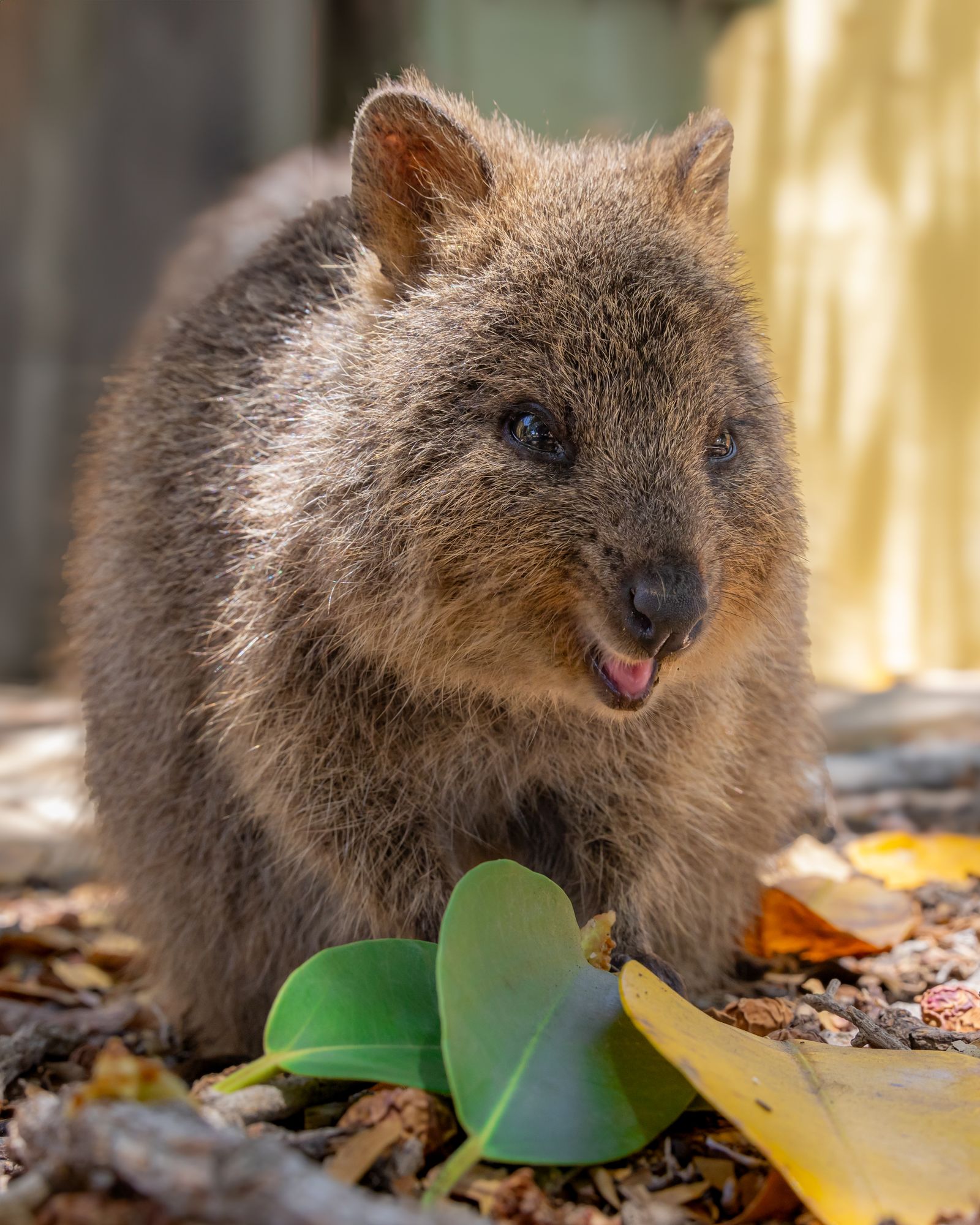
Let’s get the awkward part out of the way: the quokka isn’t smiling at you.
We know. We run a shop full of grinning quokkas, so we’re not exactly neutral here. But the question of why quokkas smile has a much less romantic answer than the internet would like, and honestly, the real story is better.
This is the short, honest version. What the famous smile actually is, how it turned a small marsupial into a selfie star, and why that fame is the reason we keep repeating one rule. Love loudly, touch nothing.
Key facts
- The quokka “smile” is the natural shape of the mouth, jaw and cheeks, not an expression of mood.
- A quokka (Setonix brachyurus) is a small marsupial in the kangaroo and wallaby family, roughly cat-sized.
- Most live on Rottnest Island (Wadjemup) off Perth, on Bald Island near Albany, or in small scattered populations in south-west Western Australia.
- Quokkas are mostly active at dusk and at night and rest in the shade during the day.
- They are listed as Vulnerable (IUCN).
- On Rottnest, touching, feeding or interfering with quokkas is not allowed. Rangers can fine people on the spot.
Why do quokkas smile?
They smile because their mouth is built that way. The corners curve upwards, and that’s the whole trick. It comes from how the jaw, lips and cheeks sit on that round little face, a bit like the dogs who look permanently worried without being worried about anything at all.
When a quokka is chewing, resting or panting a little on a warm day, the mouth often opens slightly. From the front, that reads as a big, friendly beam. Our brains are brilliant at spotting faces and terrible at not putting feelings into them.
So the quokka in that photo isn’t delighted. It might be relaxed, it might be warm, it might be thinking about leaves. We can’t tell from the grin, and neither can anyone else. The one thing we can say is that it isn’t posing.
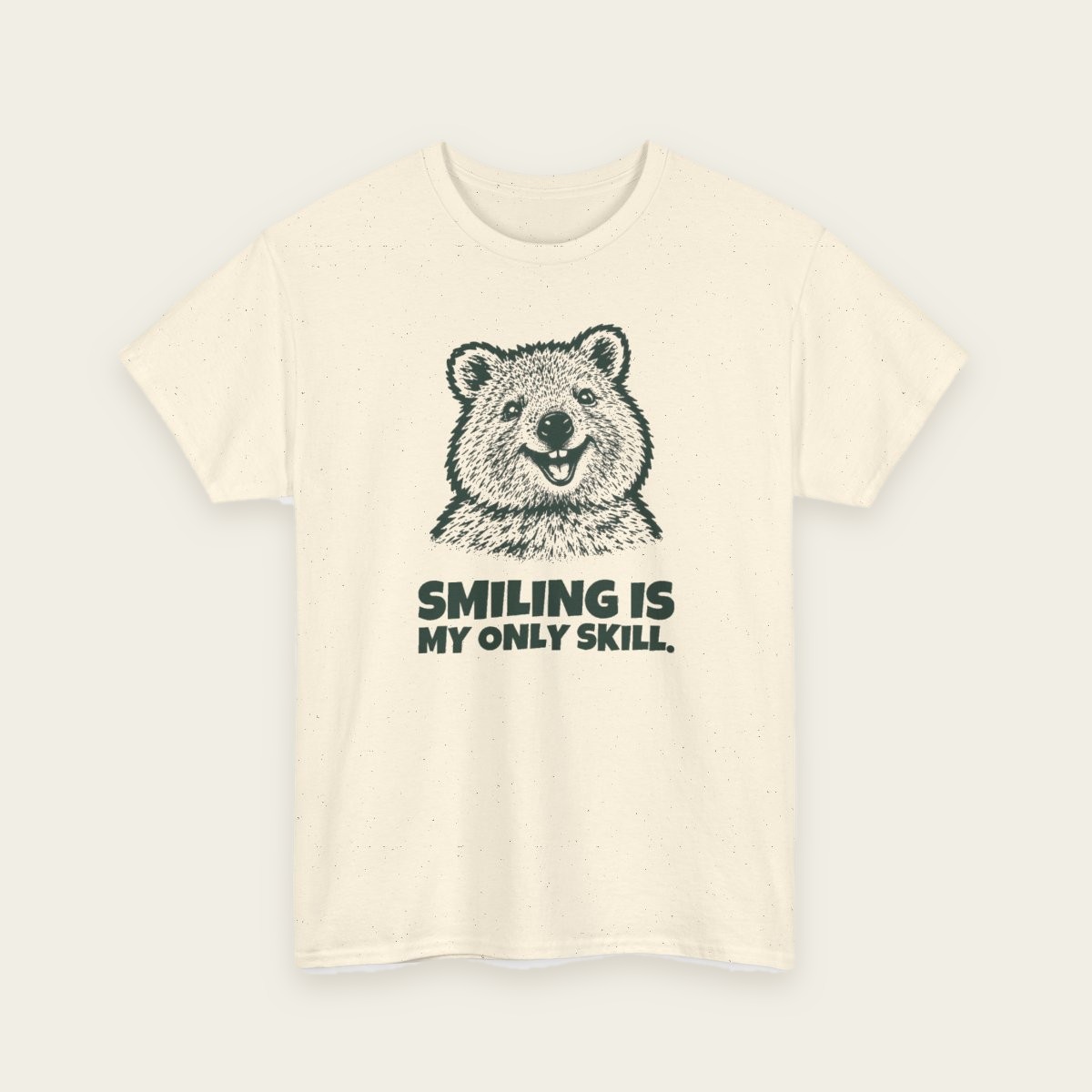
We made a tee about exactly this, Smiling Is My Only Skill. It’s the most scientifically accurate shirt we sell.
Does a quokka smile mean it’s happy?
No. The smile is a shape, so it can’t tell you how the animal feels. You may have seen quokkas called “the happiest animal in the world”. That label is a myth that grew out of the face, not out of anything the quokka was doing. We don’t use it, and we’d gently ask you not to either.
Is a quokka ever content? Probably, in the way any small wild animal can be when there are plenty of leaves around and nothing hunting it. Rottnest has no foxes or cats, which sounds like a decent life. But a wild animal’s mood isn’t something a photo can prove, and it’s certainly not something it owes us.
Here’s how the “smile” compares with what we can honestly say about it:
| What you see | What it is | What it isn’t |
|---|---|---|
| Mouth corners curve upwards | The natural shape of the jaw, lips and cheeks | A sign of joy |
| Mouth slightly open, relaxed | Often seen while chewing, resting or on a warm day | An invitation to come closer |
| A quokka that doesn’t run away | A wild animal that is used to people around | Friendliness or consent |
| A quokka lying still in the shade | Normal daytime resting, as they are mostly active at dusk and night | Boredom, or a pose |
| A quokka walking up to you | Often the result of people feeding or encouraging them | Something to reward |
What is a quokka, exactly?
A quokka is a small marsupial from the same family as kangaroos and wallabies. Think cat-sized (about 2.5 to 5 kg), with a round face, small round ears, a short tail and small hand-like front paws it uses to hold its food.
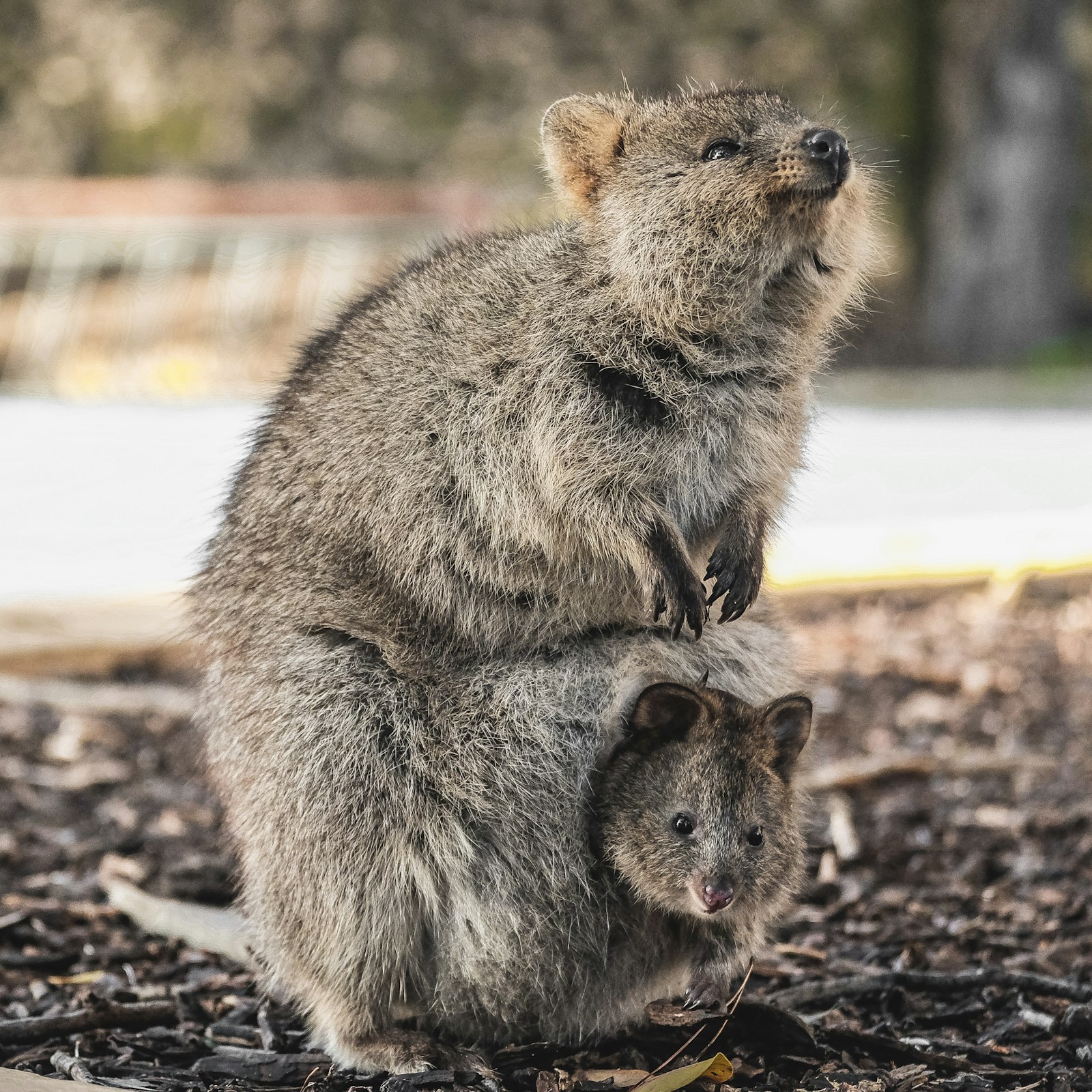
The scientific name is Setonix brachyurus. They live mainly on Rottnest Island (Wadjemup, the Noongar name) off Perth, on Bald Island near Albany, and in a few small, scattered pockets on the mainland of south-west Western Australia.
They are mostly active at dusk and during the night, and they rest in the shade by day. A quokka lying very still under a bush at noon is usually just doing what quokkas do in the middle of the day.
If you’d like more of this, our Quokka Facts page has the long version.
How is the quokka doing in the wild?
Quokkas are listed as Vulnerable (IUCN). On the mainland, introduced foxes and cats, habitat loss and clearing, and fire have all hit them hard. Rottnest has no foxes or cats, which is a big part of why it’s the best-known place to see them. The Rottnest population is around 10,000, depending on the year.
That context matters when we talk about selfies. A famous face is not a safe animal. A small, vulnerable marsupial that happens to look cheerful still needs space, shade and its natural food.
Why did the smile go viral?
Because a quokka plus a phone makes a very good photo. Some years back, the internet discovered that a quokka looks like it is posing for you. Quokka selfies took off, and Rottnest got busier with people hoping for one.
The photos themselves aren’t the issue. What sometimes happens to get them is. People lean in close, reach out, put food down so the quokka comes nearer, or stay still while a wild animal climbs on them.
Quokkas on Rottnest are used to people, so they often don’t run away. That calm gets mistaken for friendliness, and that’s where it goes wrong. A quokka that stays put does not want a hug.
Can you touch a quokka?
No. On Rottnest, touching, feeding or interfering with quokkas is not allowed. Rangers can issue on-the-spot fines, and serious cases can be prosecuted under Western Australia’s wildlife law. There’s no dollar figure here on purpose: the sources we found don’t agree, and we’d rather be right than dramatic.
Touching is a bad idea for plain reasons, too. It’s stressful for a wild animal, and it teaches the quokka that people are something to approach. Human food can also make quokkas sick, so offering “just a little bit” is never a kindness. We’ve written the longer version in What Do Quokkas Eat?.
How do you take a good quokka photo without bothering it?
Zoom in instead of stepping in. We’re not going to tell you not to take a photo of a quokka. We’d take a hundred. This is what we think a good one looks like:
- Take it from where you’re standing. Use your zoom and let the quokka carry on with its evening.
- Get low, don’t get close. Crouching down at a respectful distance gives you the face-to-face shot without crowding the animal.
- No selfie-stick, and no phone held out towards its face. A quokka should never have to share a frame with your arm.
- No food, no bait, no “just a little bit of bread”. Food teaches quokkas to approach people, and human food can make them sick.
- If a quokka moves off, the photo shoot is over.
- Never pick one up or let one climb on you. Ever.
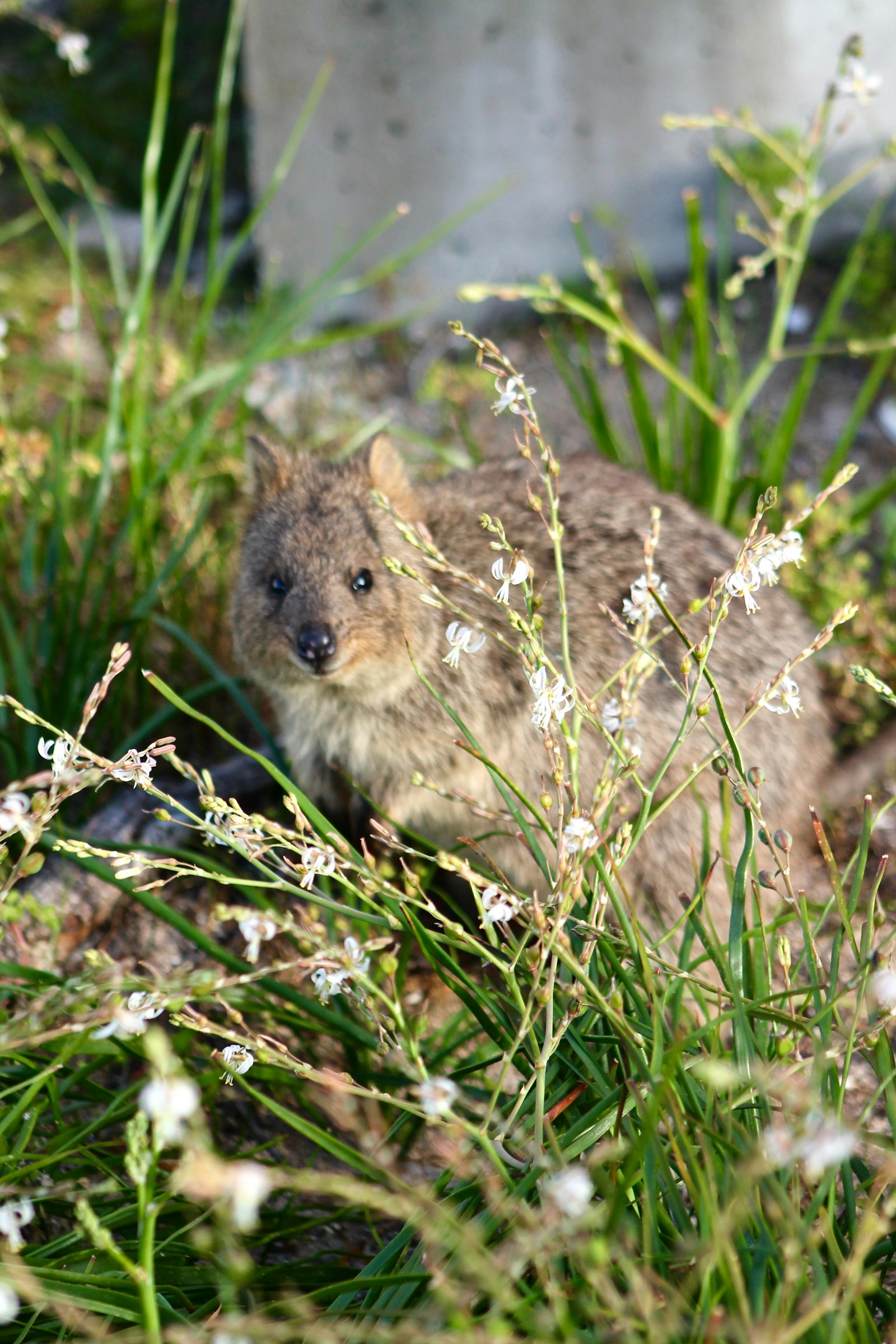
Planning a trip? Our free Rottnest Island Field Guide covers how to see quokkas the right way, and the live ferry timetables are kept up to date so we don’t have to print times here.
Love loudly, touch nothing
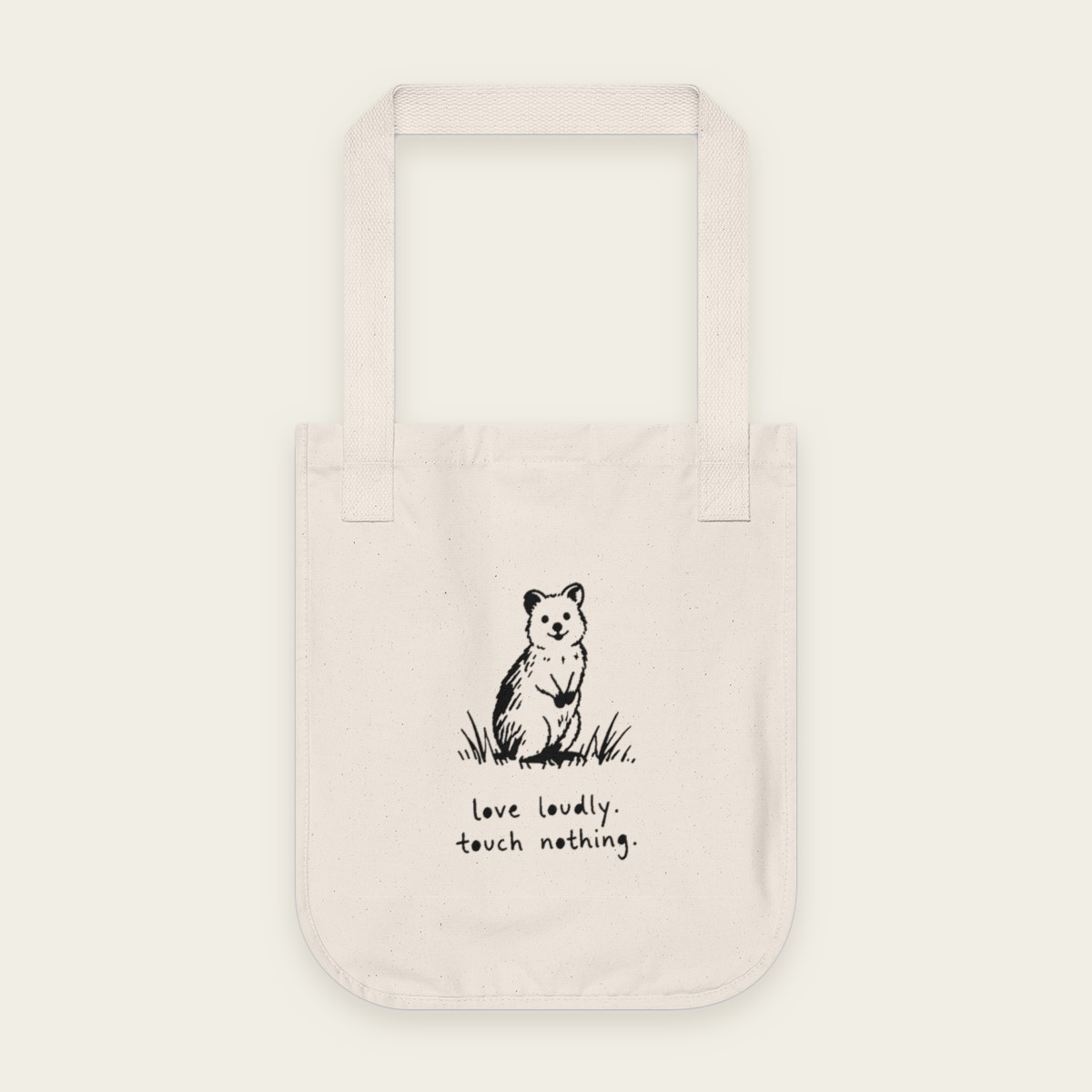
Our shop rule is four words long: love loudly, touch nothing. Be as excited as you like. Just keep your hands to yourself, and your food in your bag.
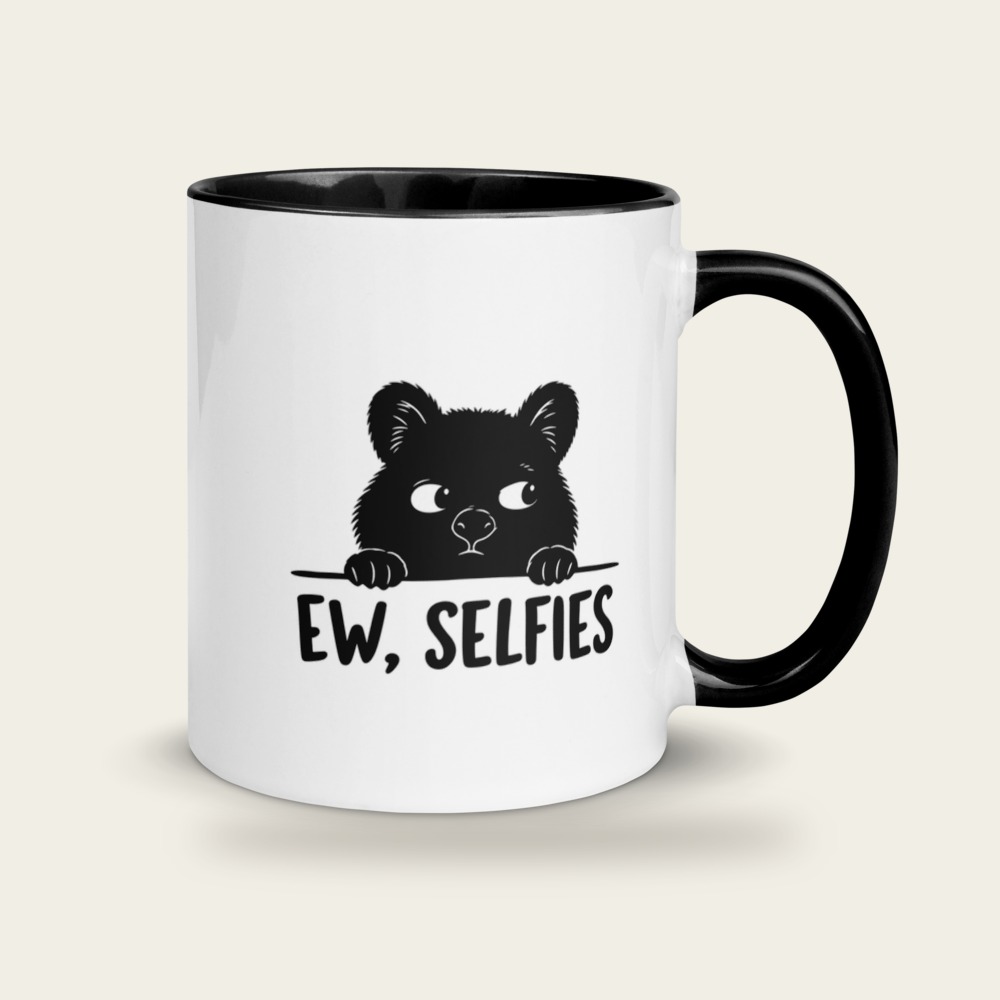
If you love quokkas the way we do, we’ve made a few things that say it without anyone getting too close. Our Funny Quokkas collection is where the grin gets its jokes, and there’s a whole range of T-shirts and mugs to browse.
Three of our favourites on this exact topic:
- The Ew, Selfies mug
- The Yes I’m Smiling, No Not for Your Selfie mug
- The Love Loudly, Touch Nothing tote
3% of every order’s subtotal is set aside for quokka protection. You can read how that works on the Our Promise page.
Frequently asked questions
Do quokkas really smile?
Not in the way we do. A quokka’s mouth curves upwards because of the shape of its mouth and face, so the “smile” is always there. It doesn’t mean the quokka is feeling anything in particular.
Are quokkas happy animals?
We can’t say, and the smile can’t tell us. The grin is the shape of its face, not a mood. A quokka with plenty of food and no predators is probably doing fine, but that is a guess, not a fact.
Why are quokka selfies a problem?
Because getting the photo often means getting too close. People crouch right next to a wild animal, reach out, or leave food to lure it nearer. Quokkas on Rottnest are used to people and often don’t run away, but staying put isn’t the same as being comfortable.
Can you touch or feed a quokka?
No. On Rottnest, touching, feeding or interfering with quokkas is not allowed. Rangers can issue on-the-spot fines, and serious cases can be prosecuted. Human food can also make quokkas sick.
Are quokkas endangered?
Quokkas are listed as Vulnerable (IUCN). Mainland populations are small and scattered, and introduced foxes and cats, habitat loss and fire are the main threats there. Rottnest has no foxes or cats, and its quokka population is around 10,000, depending on the year.
What is the best way to photograph a quokka?
Stay where you are and zoom in. Crouch at a respectful distance for a face-to-face shot, keep food away, and let the quokka walk off whenever it likes. A good quokka photo never needs you to step closer.
Related reading
— Balázs & Dorina, Quokka Planet
Sources: Rottnest Island Authority, Australian Museum.
The cover image of this article is AI-generated (Adobe Firefly). The quokka photos inside the article are real.