
Quick answer: Quokkas are herbivores. They eat grasses, sedges, leaves, shoots and succulent plants, mostly in the evening and at night, and they get much of their water from those plants. They shouldn’t be fed by people. Human food can make them sick and changes how they behave, and on Rottnest feeding wildlife is against the rules.
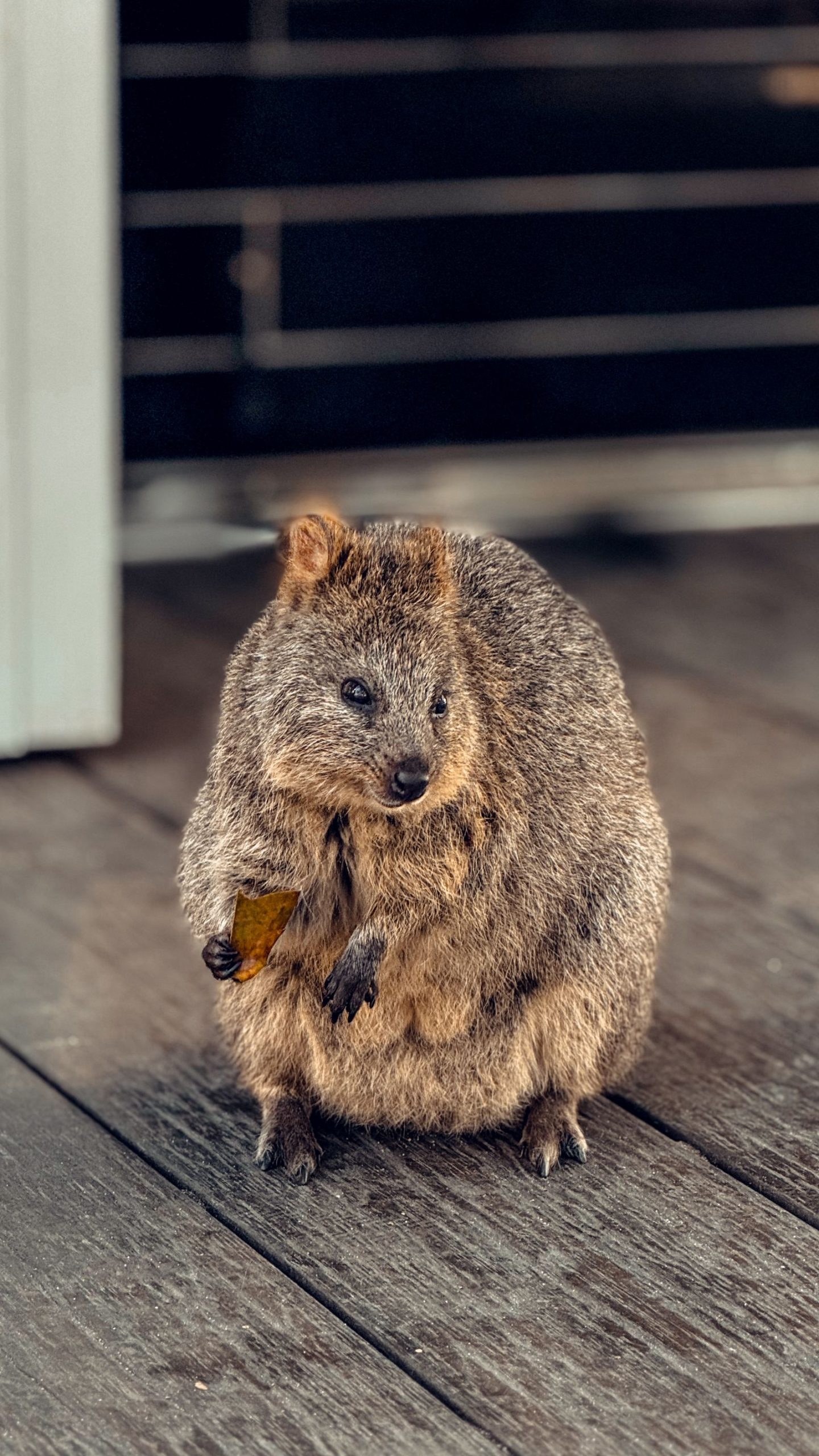
If you’ve ever watched a quokka eat, you’ll know it’s oddly mesmerising. It holds a leaf in its little hands, nibbles it down like a corn cob, and looks extremely pleased with itself. (It isn’t. That’s just its face. We’ve written about that.)
So what do quokkas eat, and what should you do if one wanders towards your lunch? Short answers below, then the detail.
Key facts
- Quokkas are herbivores: grasses, sedges, leaves, shoots and succulent plants.
- They graze mostly at dusk and at night, and rest in the shade during the day.
- They can bring food back up and chew it again, a bit like cud.
- Much of their water comes from the plants they eat.
- The dry late summer is the hardest time of year for them.
- Human food can make quokkas sick and teaches them to approach people.
- On Rottnest, feeding or interfering with quokkas is not allowed, and that includes leaving out water.
What do quokkas eat in the wild?
Mostly plants. Lots of plants. A quokka (Setonix brachyurus) is a small marsupial in the same family as kangaroos and wallabies, and like its relatives it lives on plant food. Grasses and sedges are the everyday basics. Leaves and shoots come from shrubs and low bushes. Succulent plants are handy because they hold water.
That’s more or less the whole list, and it’s why you don’t need to wonder whether the quokka in front of you is hungry for anything you’re carrying. It already has a menu, and it’s growing all around it.
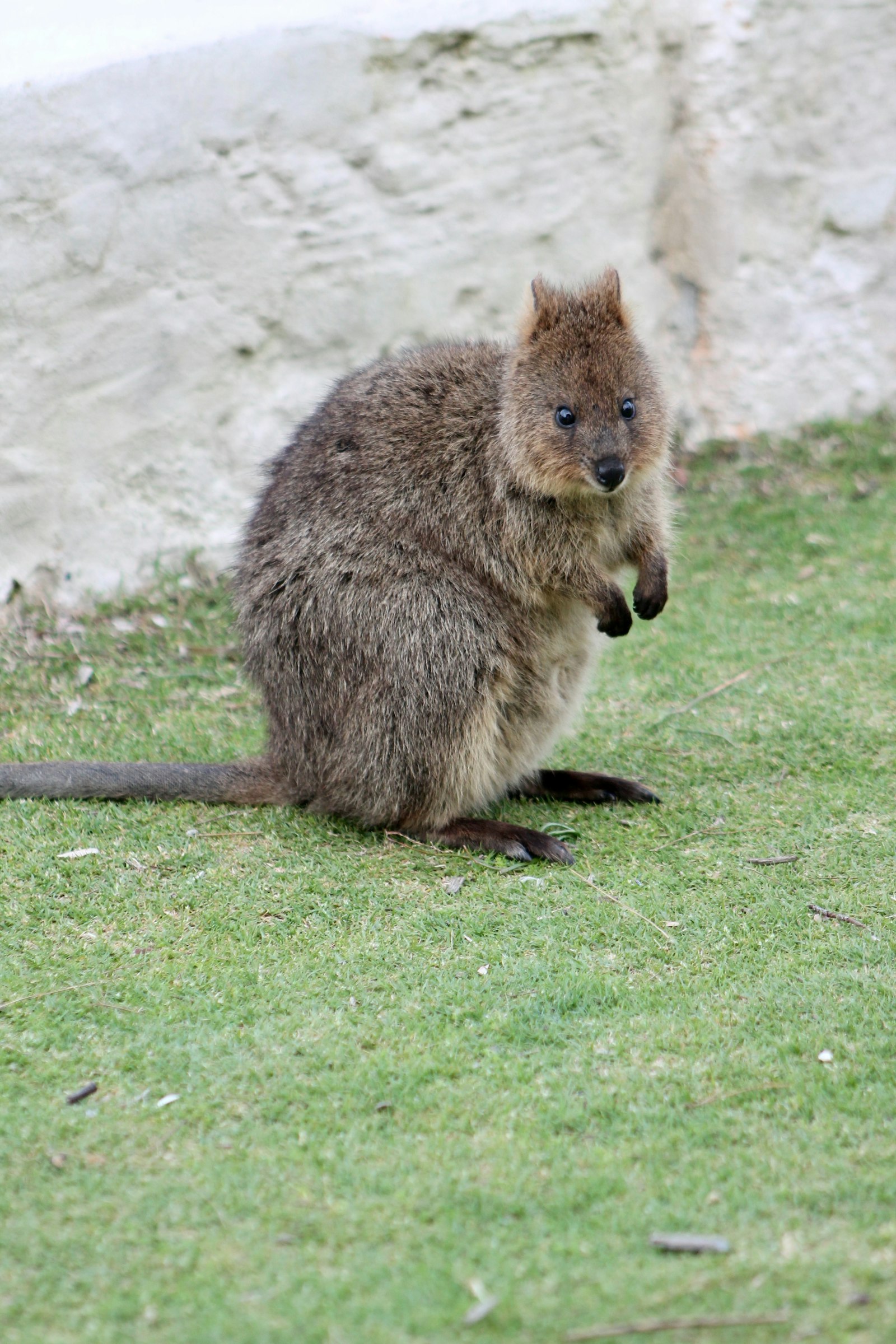
Here is the plant menu next to the “menu” that visitors sometimes imagine:
| On the quokka’s menu | Not on the quokka’s menu |
|---|---|
| Grasses and sedges | Bread, biscuits and chips |
| Leaves and shoots | Fruit and leftovers from your picnic |
| Succulent plants | Anything from a café or a bag |
| Water from the plants themselves | Water poured out for them by visitors |
How do quokkas digest tough plants?
They can chew their food twice. Like their kangaroo and wallaby cousins, quokkas are good at getting a lot out of tough, fibrous plants. They can regurgitate food and chew it again, a bit like a cow chewing its cud.
It sounds odd, and it’s fine. If you see a quokka chewing away while apparently doing nothing else, that might be what’s happening. Their small, hand-like front paws help them hold leaves and shoots while they eat, which is where the corn-cob look comes from.
When do quokkas eat?
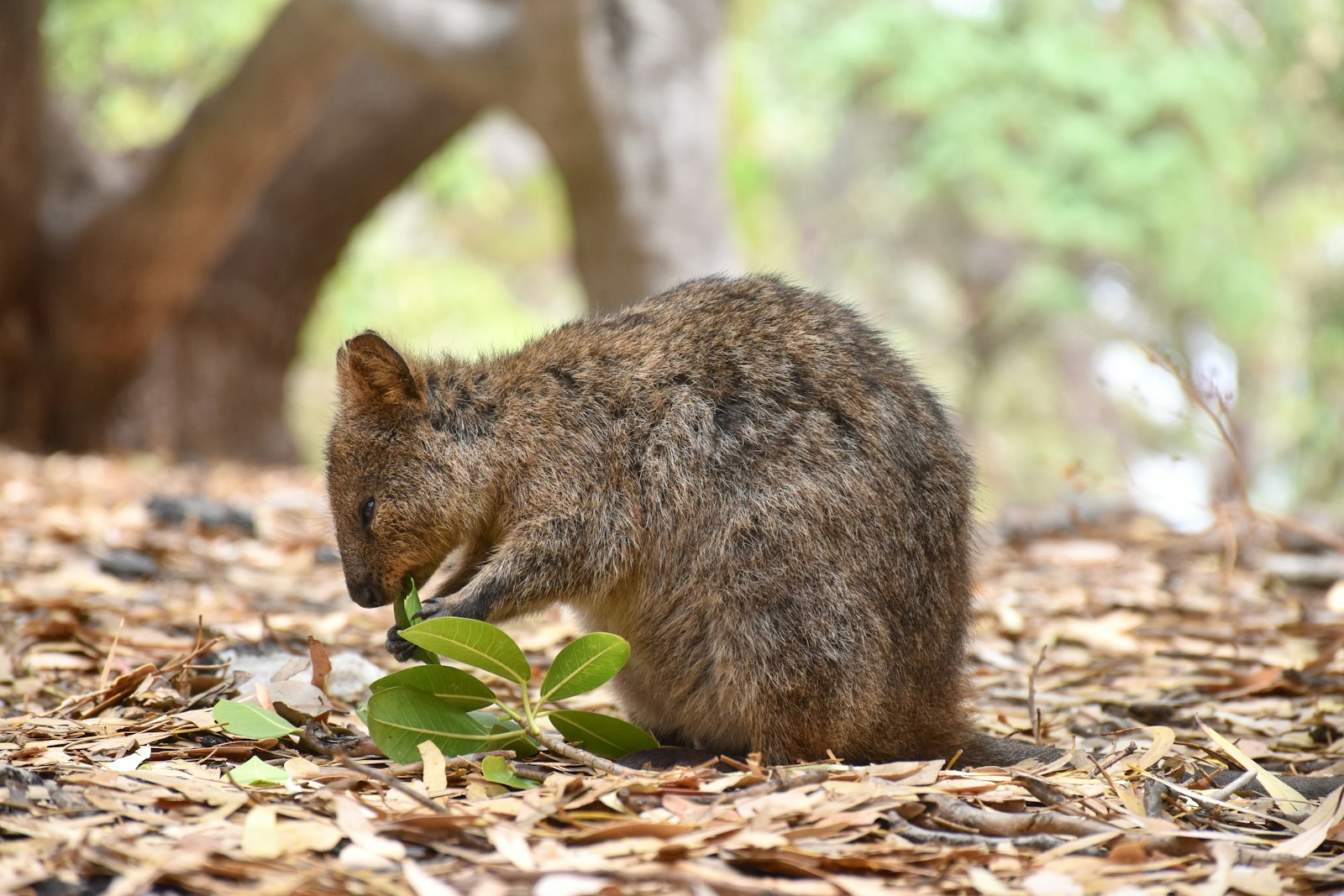
Mostly in the evening and at night. Quokkas are active at dusk and after dark, so that’s when most of the grazing happens. During the day they usually rest in the shade of shrubs and trees.
That’s why you’ll often find a quokka lying very still under a bush in the middle of the day, and why the best time to see one is not always the sunniest. If you’d like a plan for seeing them well, the free Rottnest Island Field Guide is the place to start, and our live ferry timetables keep the times current.
What do quokkas drink?
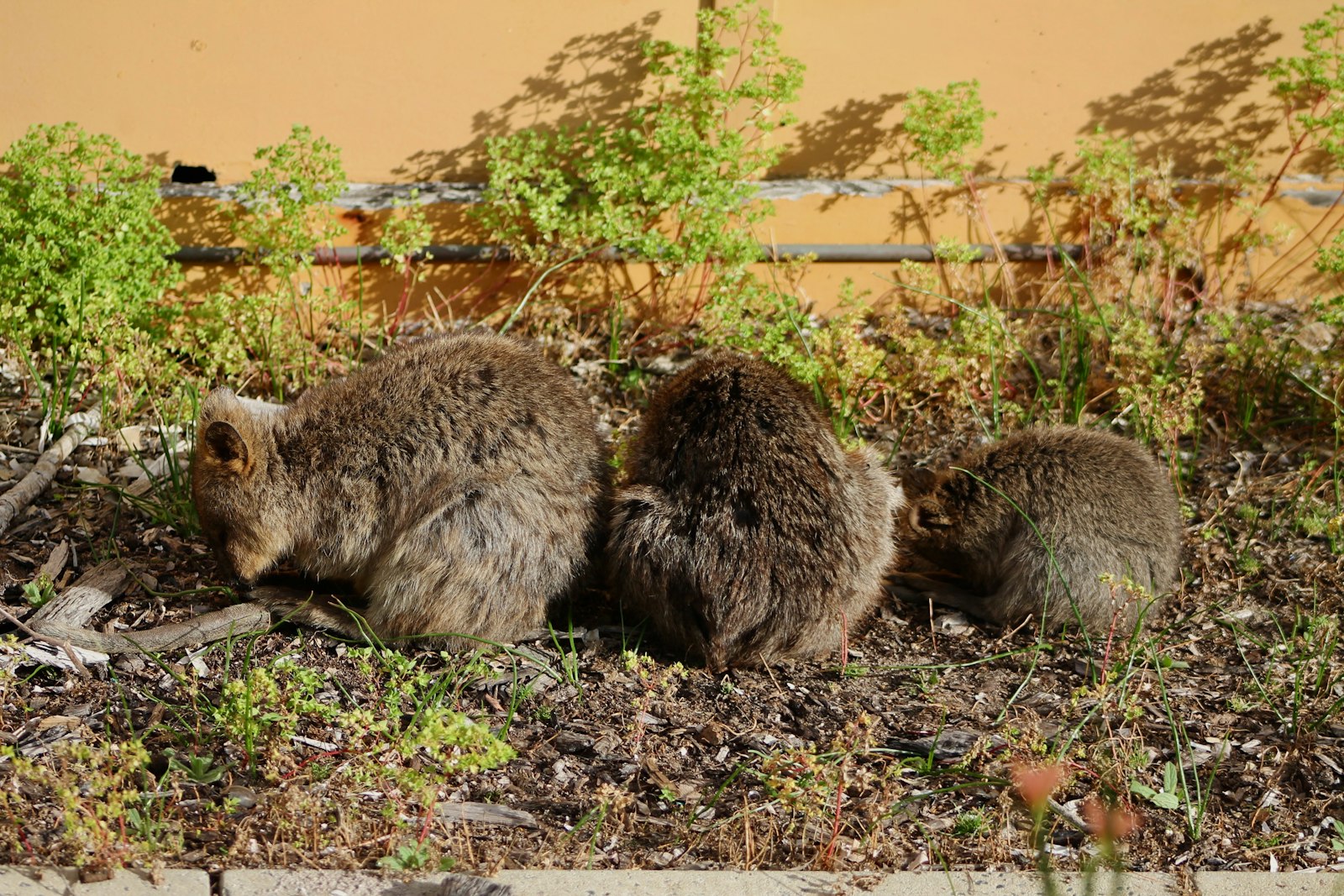
Much of their water comes from the plants they eat. That’s why succulents and fresh green food matter, and why you don’t need to put anything out for them.
Which brings us to a point that surprises people: don’t leave water out for quokkas either. It draws them towards people, and it isn’t something wild quokkas need from us.
How do quokkas cope with dry summers?
Carefully. Quokkas live in a part of Australia with a dry season, and the dry late summer is the hardest time of year for them. When plants are tough and dry, there is less to eat and less moisture in it.
That’s one more reason the extra stress of visitors isn’t welcome. A quokka that is already managing a hard stretch doesn’t need a crowd of people trying to feed it, follow it or pick it up.
It’s also part of why protecting the places quokkas live matters. Rottnest has no foxes or cats, and the mainland populations are small and scattered. Quokkas are listed as Vulnerable (IUCN), and the Rottnest population is around 10,000, depending on the year.
Can you feed a quokka?
No, please don’t. This isn’t one of those rules that exists only to be a rule.
Human food can make quokkas sick. Bread, chips, biscuits, fruit and the leftovers from your picnic aren’t what their bodies are built for. Their digestion is made for tough plants, not processed food.
It also changes how they behave. A quokka that learns that people mean food starts hanging around picnic spots, cafés and busy paths. That’s how they end up stressed, injured or worse, and it can make them less wary of things they should be wary of.
And it’s against the rules. On Rottnest, touching, feeding or interfering with quokkas is not allowed. Rangers can issue on-the-spot fines, and serious cases can be prosecuted under Western Australia’s wildlife law. We haven’t put a dollar amount here because the sources don’t agree.
This is the heart of what we say at Quokka Planet: love loudly, touch nothing.
What should you do if a quokka comes up to you?
Keep your food packed away and let it carry on. Quokkas on Rottnest are used to people, so one may wander over out of curiosity. That is not a request for a snack.
- Keep food in your bag, and eat away from them.
- Don’t hold anything out to coax one closer, not even a leaf.
- Don’t touch it, however calm it looks.
- Take your rubbish with you. Wrappers and leftovers are exactly the kind of thing that gets them into trouble.
- Step back and let it go. If it wanders off, that’s the end of the encounter.
We’ve pulled the practical stuff into the Rottnest Island Field Guide. And if you’re bringing a camera, read why quokkas smile before you set off.
What if a quokka looks hungry or unwell?
Still don’t feed it. Tell a ranger instead. A quokka resting in the shade, or chewing slowly with its eyes half shut, is usually just being a quokka. They are mostly active at night, so a daytime nap is normal and not a sign of trouble.
If an animal does look injured or genuinely unwell, the helpful move is to keep your distance and let the island’s rangers know. They can judge what is going on, and you can’t do that from a picnic table. Offering food can only make things worse.
Why does their diet matter so much?
Because a quokka’s whole way of life is built around it. The grazing at dusk, the resting in the shade, the water from succulents and the chewing food twice are all one system for getting by on tough plants in a dry place. Put human food into that system and you don’t help it, you interrupt it.
It’s the same reason we keep saying that the kindest thing to do is nothing. Watch, photograph from where you stand, enjoy it, and leave the quokka to its leaves.
The leaf that started a tee
We love watching quokkas eat so much that a few of our designs are just that: a quokka and a leaf, sometimes with a firm opinion about snacks.
- The Leaf Me Alone tee is for introverts.
- The Snack Time embroidered cap is for anyone who thinks about lunch a lot.
- Our favourite message is on the No Snacks, Thanks! tee.
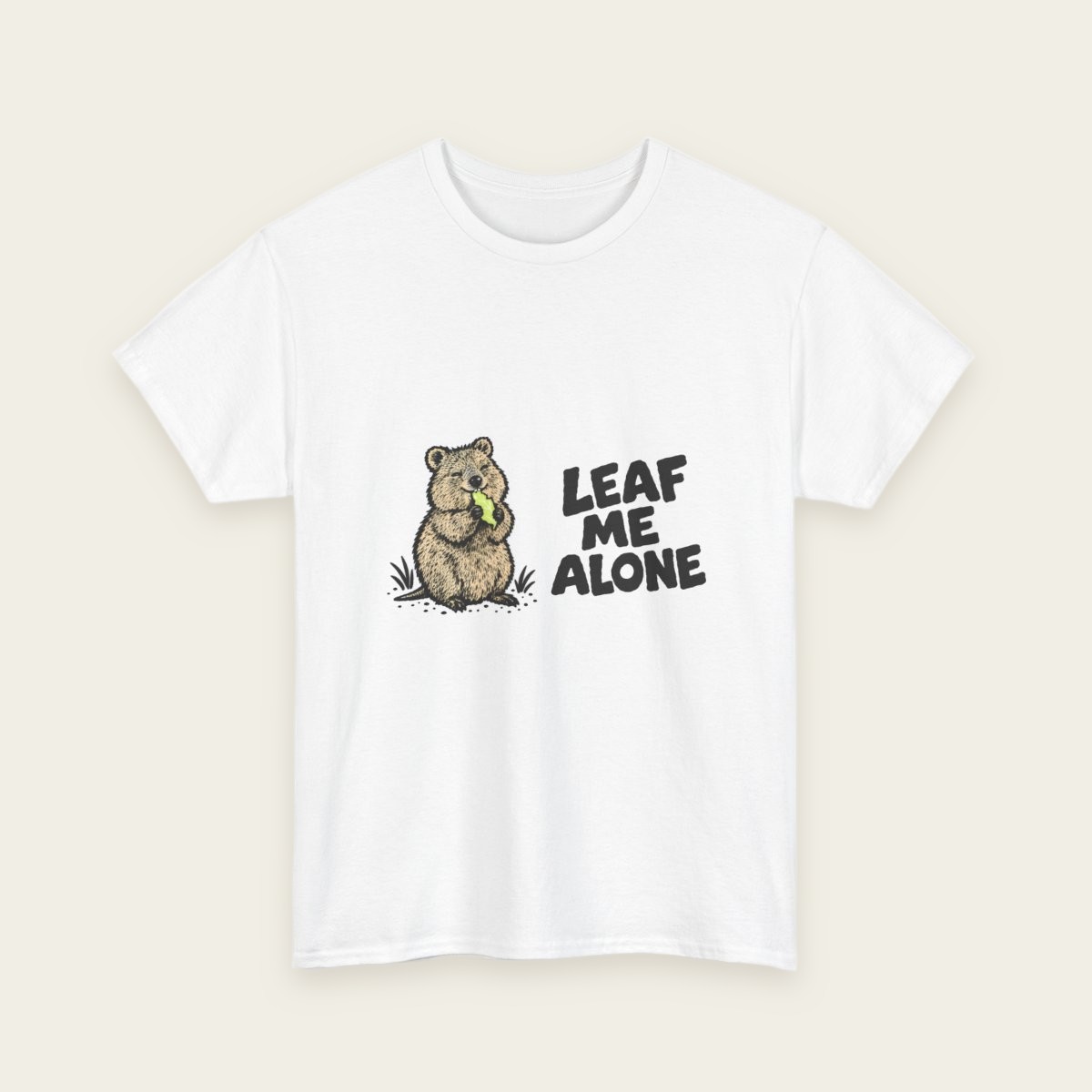
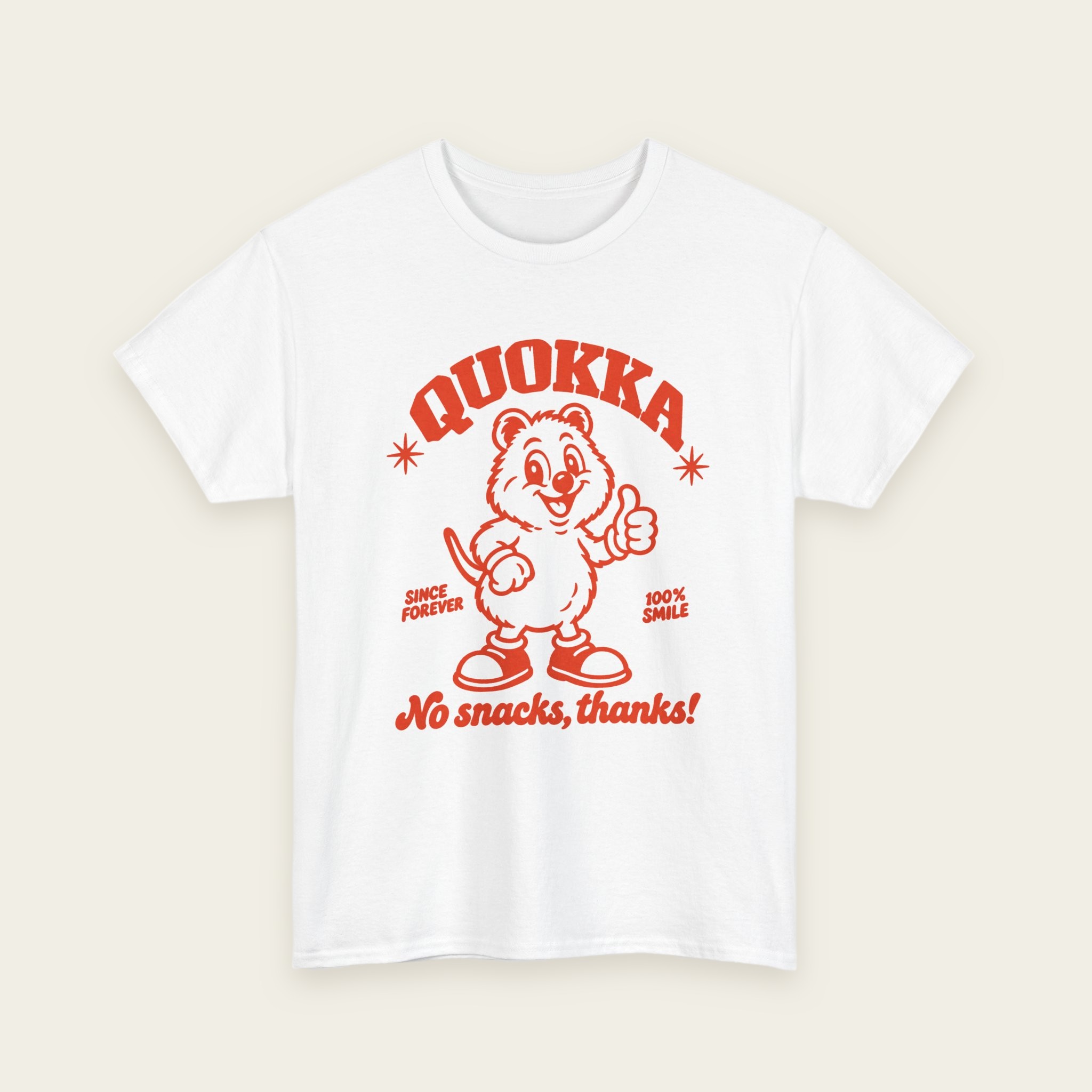
You can browse more in our Funny Quokkas collection, or see everything in the shop. 3% of every order’s subtotal is set aside for quokka protection, and you can read how that works on the Our Promise page.
Love loudly, touch nothing, and definitely don’t share your sandwich.
Frequently asked questions
What do quokkas eat?
Quokkas eat plants: grasses, sedges, leaves, shoots and succulents. They are herbivores, and they graze mostly in the evening and at night. They can also regurgitate food and chew it again, like cud.
Are quokkas herbivores?
Yes. Quokkas are small marsupials related to kangaroos and wallabies, and their diet is entirely plant-based. They get much of their water from the plants they eat.
Can you feed a quokka?
No. Human food can make quokkas sick and teaches them to approach people. On Rottnest, feeding or interfering with quokkas is not allowed. Rangers can issue on-the-spot fines, and serious cases can be prosecuted.
What do quokkas drink?
Much of their water comes from the plants they eat. You shouldn’t leave water out for them either, because it brings them close to people and isn’t something they need from visitors.
When do quokkas eat?
Mostly at dusk and during the night. By day they usually rest in the shade of shrubs and trees, which is why you often see one lying very still under a bush.
Why is the dry summer hard for quokkas?
The dry late summer is the hardest time for them, because there is less fresh plant food and less moisture in the plants they rely on for water. It is another reason to give them space and never add extra stress.
Related reading
— Balázs & Dorina, Quokka Planet
Sources: Rottnest Island Authority, Australian Museum.
The cover image of this article is AI-generated (Adobe Firefly). The quokka photos inside the article are real.